How to get a NIE in Spain as a foreigner: complete Valencia guide (2026)
The first piece of paperwork that unlocks everything else
If you're moving to Spain — to live, to work, to retire, or to buy a home — there's one piece of paper that has to come before everything else. Without it, you can't sign a long-term rental contract. You can't open a real bank account. You can't sign for a property purchase or set up an electricity bill. You can't even register at your town hall.
That piece of paper is your NIE: the Número de Identidad de Extranjero, your foreigner identification number in Spain. It's the first piece of Spanish bureaucracy you'll meet, and almost every other administrative step depends on it.
This guide walks through the complete process for 2026 — both routes (from your home country and from inside Spain), the exact documents you'll need, what it costs, how long it actually takes in Valencia, and the small details that cause most rejections.
What a NIE actually is (and what it isn't)
The NIE is a personal, unique, lifetime tax and identification number. Once you have it, it's yours forever — it doesn't expire, can't be revoked, and follows you across every interaction with Spain.
A few common confusions worth clearing up:
- NIE vs NIF. The NIF is the general Spanish tax identification number. For Spaniards it matches the DNI; for foreigners, the NIE is your NIF. Same number, different name depending on the context.
- NIE vs TIE. The NIE is the number. The TIE (Tarjeta de Identidad de Extranjero) is the physical residence card that non-EU residents receive once they have a residence permit. You can have a NIE without a TIE — most foreign property buyers do. You cannot have a TIE without a NIE.
- NIE vs residency. A NIE on its own does not give you the right to live in Spain. It's an identification number for any foreigner who needs to interact with the Spanish administration — whether you live here or not. If you're buying a holiday home from Munich, you still need one.
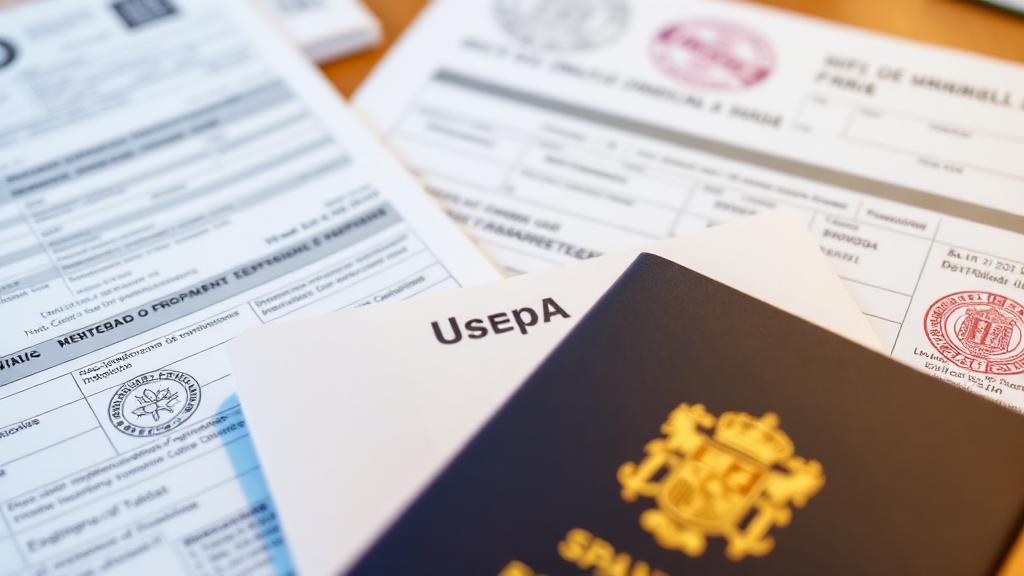
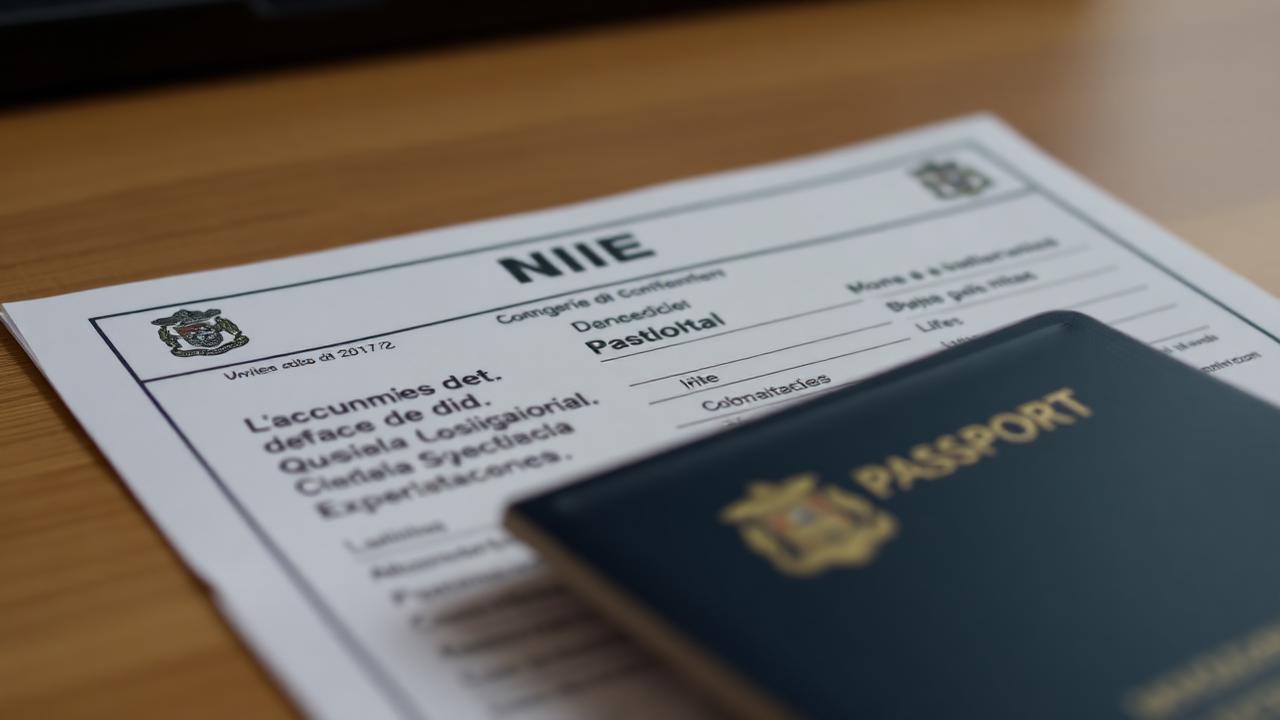
The NIE itself is issued as a single A4 white sheet — the Certificado de Asignación de NIE — listing your number, name, nationality, and the issuing office's stamp. There is no plastic card. Don't laminate it. Most banks and notaries will ask for the original or a recent copy.
Two ways to get it: from your country or from Spain
There are exactly two legal routes to a first NIE, and which one you choose depends mostly on whether you're already on Spanish soil.
Route 1 — From your home country, via a Spanish consulate
This is the route most international buyers and remote planners use. You apply at the Spanish consulate that serves your area of residence (consulates are territorial). You hand in or post your file, the consulate sends it to the General Police Headquarters in Madrid, and a few weeks later you receive your NIE certificate by email or post.
Processing time is typically two to six weeks, but some high-demand consulates (London, New York, Berlin) can run longer. Plan for two months from application to certificate in hand.
Route 2 — From inside Spain, at a police station
If you're already in Spain on a tourist stay, a Digital Nomad Visa, or any other short-term basis, you apply in person at a designated police station. In Valencia, that means the Comisaría de Patraix, the only office in the city that handles first-time NIE assignments for non-EU foreigners.
The advantage: you walk in with your file in the morning, and you usually walk out the same day with your stamped EX-15 or a resguardo (receipt). The certificate itself arrives as a PDF by email within five to ten working days in 2026.
The disadvantage: you have to get a cita previa (appointment slot), and Valencia is one of the most oversubscribed offices in Spain.

What you'll need: the document checklist
The official requirement is short. The unofficial reality — the small details each office insists on — is what trips most applicants up.
| Document | Notes |
|---|---|
| EX-15 form (signed) | Application form. Two pages. Available as PDF from the Ministry of Interior. Fill it digitally, print it, sign in blue ink. Two original copies. |
| Modelo 790, Código 012 (paid and stamped) | The fee form. Generated online, paid at a Spanish bank, returned with the bank's stamp. Roughly €9.84 in 2026 (some sources cite up to €12 — verify on generating the form). |
| Valid passport (original + copies) | A full photocopy of every page that has a stamp or biometric data. |
| Justification for needing the NIE | A document proving why you need it: signed arras contract for property buyers, employment offer letter for workers, university acceptance for students, bank's letter for investors. The more concrete and Spanish, the better. |
| Spanish address | Even if you don't live here yet — a hotel reservation, a friend's address, or an estate agent's office. Blank address fields cause automatic rejections. |
| Cita previa confirmation | Print the PDF or screenshot. Required at the door. |
| (For consular route) Sworn translation of the justification | Required by most consulates if the justification is not in Spanish. |
The form itself stays in Spanish. If you're going to the trouble of printing it, type it digitally — it removes one common reason for rejection.
The consular route, step by step
If you're applying from outside Spain, here's the sequence that works in 2026:
- Identify your consulate. Spanish consulates are territorial. Apply to the wrong one and your file is returned. Check the Ministry of Foreign Affairs map at exteriores.gob.es.
- Book your appointment through the consulate's online portal. Booking can be the slowest step; plan three to eight weeks ahead.
- Generate and pay the Modelo 790-012. The form is generated on the National Police's electronic site (sede.policia.gob.es). Choose "Asignación de Número de Identidad de Extranjero (NIE) a instancia del interesado". Pay at a collaborating Spanish bank, or by international transfer if your consulate accepts it.
- Fill in the EX-15. Pay close attention to four fields that cause most rejections: your Spanish address (give one even if temporary), the reason for the NIE (tick exactly one box and match it to your justification document), the address in your country of origin (must be your home address), and the signature, which must match your passport exactly.
- Submit your file in person or by post, depending on the consulate's policy. Bring originals and copies. The consulate keeps copies; you walk out with stamped originals.
- Wait for the certificate. It arrives by email in PDF format (most consulates) or by post. Two to six weeks is the typical window.

The Valencia route, step by step
If you're already in Spain, the in-person route at the Comisaría de Patraix is faster — but the bottleneck has moved from processing time to appointment availability.
The office
Comisaría de Patraix — Brigada Provincial de Extranjería y Fronteras
Calle dels Gremis, 6 — 46014 Valencia (Polígono Vara de Quart)
Phone: 963 13 61 06 (extranjería line) or 963 59 33 09 (general)
Hours: Monday to Friday, 9:00–14:15. Monday to Thursday afternoons, 18:00–19:45.
Metro: Línea 5 (Patraix or Avinguda del Cid).
The cita previa
This is the hardest part of the entire process in 2026. NIE appointments at Patraix are released through the central platform at sede.administracionespublicas.gob.es. Choose Valencia province, then Policía-Asignación de NIE, then either cualquier oficina (recommended) or specifically Patraix.
Three things to know:
- New slots are released in batches, not on a fixed schedule. Many users report better luck early in the week, between 8:00 and 9:30 in the morning.
- The system frequently shows "En este momento no hay citas disponibles" even when slots have just been released, because they're booked within minutes.
- Third-party services monitor the portal and notify you when a slot opens. They charge a fee, but for someone on a tight timeline, the convenience can be worth it.
The appointment day
Arrive 15 minutes early with your physical pack. Phones at the counter are generally not accepted in 2026 — bring everything printed.
The officer reviews your file, asks short questions about your reason for applying, stamps the EX-15, and either gives you a same-day stamped copy or a resguardo with your reference. The certificate itself arrives as a PDF by email within five to ten working days. Save it; print it; keep it.
What it costs
| Item | Approximate cost (2026) |
|---|---|
| Modelo 790, Código 012 fee | €9.84 (some sources cite up to €12) |
| Sworn translation of justification (if applicable) | €30–€80 per page |
| Notarized power of attorney (if you appoint a representative) | €50–€100 |
| Third-party cita previa search service (optional) | €25–€60 |
| Lawyer or gestor full handling | €150–€350 |
The state fee itself is symbolic. The cost of the NIE, in practice, is the time you spend chasing an appointment slot.
How long it really takes
| Route | Best case | Realistic | Worst case |
|---|---|---|---|
| Consulate (from your country) | 2 weeks | 4–6 weeks | 8–12 weeks (London, NYC, Berlin) |
| Patraix in person — same-day | 1 day | 1 week to find a cita + 1 day | 4–8 weeks to find a cita |
| Through a lawyer or gestor | 1 week | 2–3 weeks | 4–6 weeks |
If you have a hard deadline — a property closing, an employment start date, a Digital Nomad Visa expiry — the safest option is to start from your home country before flying in.

After you have your NIE: what comes next
The NIE unlocks the rest of your administrative life in Spain. The realistic order:
- Open a Spanish bank account. Most banks (CaixaBank, BBVA, Sabadell, Santander) accept the NIE certificate as your sole identification for non-resident accounts.
- **Register your address (empadronamiento).** Once you have a long-term rental contract or property deed, register at your local Junta de Distrito in Valencia. Free, one appointment, and the precondition for a public health card, school enrolment, or residency.
- Apply for residency (if you're going to live here longer than 90 days). EU citizens register at the Comisaría de Bailén (C/ Bailén, 9, Valencia). Non-EU citizens go through the visa route from their home country, then apply for the TIE upon arrival.
- Sign your property purchase or long-term lease. Notaries and rental contracts both require your NIE on the document.
Each step unlocks the next.

What goes wrong: the most common rejections
After watching dozens of files move through the Valencia system, three reasons account for most rejections or delays:
- Mismatched justification. The reason you tick on the EX-15 must exactly match your supporting document. "Property purchase" requires an arras contract or a notary's letter, not a screenshot of a listing.
- Blank or wrong address fields. Even a temporary Spanish address is required. The home-country address must be your real one.
- Outdated certificate. Banks and notaries sometimes reject certificates older than three months. If yours is rejected, request a duplicate by paying the Modelo 790-012 fee again.
A fourth, less common one: a typo in the PDF certificate. Check it the moment it arrives. If your name, passport number, or date of birth is wrong, return to the office immediately to request a correction.
Where we fit in
Getting a NIE is the first administrative step of a much longer process — finding a place to live, registering your address, opening a bank account, and (for some) signing a rental or buying a property. We built Raíces Valencia for exactly this kind of moment: the gap between deciding to come and being settled in.
Our day job is relocation. We handle the paperwork sequence — NIE, empadronamiento, residency, banking, healthcare — and we know which Valencia offices move fast, which addresses cause file rejections, and which weeks of the year the cita previa system opens up. For clients who are also buying a property here, we operate as an independent buyer's agent within the same relocation framework.
If you're starting your move from outside Spain and want a clear paperwork plan before you fly in, book an initial consultation and we'll map out the order, the documents, and the realistic timeline for your case.
We're two migrants who did this ourselves, with our own families, in this same city.
Related guides
- Complete guide to buying property in Valencia as a foreigner
- The real cost of buying property in Valencia (2026)
- Buyer's Agent service in Valencia
Official sources
- Ministry of Interior — Police e-Office: NIE assignment
- Government Delegation in the Valencian Community — Foreigners info
- Public Administration e-Office — Foreigners appointment system
- Ministry of Foreign Affairs — NIE through consulates
- Modelo 790 Código 012 — Police fee form
- University of Valencia — TIE and empadronamiento