Rental scams in Spain: how to spot a fake apartment listing in Valencia before you pay or send your documents
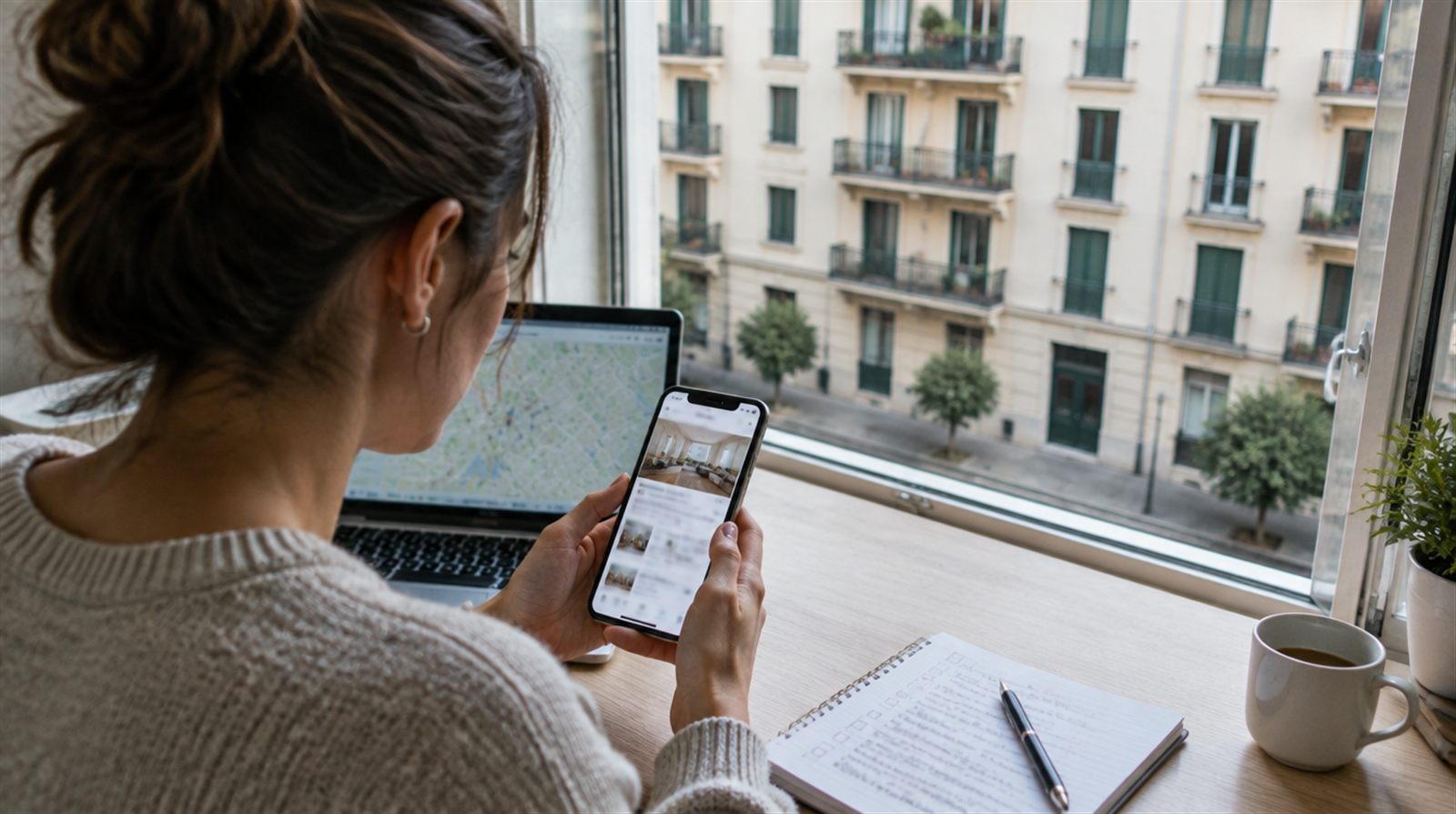
The rule that will save you from almost every rental scam in Valencia is simple: do not pay anything or send your full documents until you, or someone you trust, have seen the flat in person and checked who owns it. Scammers know this, which is why nearly all their techniques are designed to get your money or your documents before that visit.
In a market as tight as Valencia's, where good flats are rented within hours, pressure works in their favour, and people moving from abroad are the easiest targets because they cannot visit. Fraud is not a niche problem: according to Spain's Ministry of the Interior, 429,677 online frauds were recorded in Spain in 2025, almost nine in ten cybercrimes, and the province of Valencia was among the three with the most cybercrime in 2024. There is no official figure for rental scams alone, but as a relocation service we see attempts every month.
This guide explains how the most common rental scams work, the checks we use to spot a fake listing, and what to do if you have already been caught.
The most common rental scams in Valencia
1. Paying a deposit before you can view the flat
The classic, and it still works. The so-called owner cannot show you the flat because they live abroad, are travelling, or "lots of people are interested", and asks for a holding deposit, a reservation fee or the security deposit to "keep it for you" or to post you the keys.
INCIBE, Spain's national cybersecurity institute, warns against "owners who live abroad and for some reason cannot show you the flat in person", and against anyone asking you to pay through money transfer services such as MoneyGram or Western Union, or by transfer to a bank in another country. The big Spanish property portals say the same: never pay money in advance, and never make a transfer before visiting the property.
Red flags: the advertiser cannot show you the flat, asks for money before the viewing, pressures you with other "interested people", or wants payment through a channel that leaves no trace.
2. Asking for your documents too early, then moving you to another platform
This is the newest technique we have come across, and the most dangerous, because they do not always ask for money at first.
Recently, one of our clients found an amazing flat in a great area at a surprisingly low price. The supposed owner first asked for her private documents, saying she would then list the flat on another platform where my client could rent it. That is the pattern: your documents first, then a website other than the portal where you found the listing.
With this technique the scammer can get two things:
- Your identity. INCIBE has documented cases in which scammers reused copies of previous victims' ID documents to impersonate them. With a copy of your ID, Spain's consumer organisation OCU warns, someone can apply for loans in your name, open accounts, or sign phone, electricity or insurance contracts. Spain's National Police warned in 2025, as reported in the press, about fake rental offers designed to obtain victims' documents and bank details.
- Your money, on a fake website. INCIBE warns about emails with links to "replicas of more popular platforms that are actually fake", designed to get your bank details and personal information. If someone asks you to pay outside the portal, be suspicious. OCU's advice: always communicate through the platform and never transfer money from outside the website or app.
How to protect yourself: do not send copies of your passport, residence card, payslips or bank statements until you have visited the flat and checked who owns it. When the time comes, OCU recommends adding a visible watermark to the copy stating the purpose and date (for example, "Only for the rental of X street, 01/10"). Never share passwords or banking codes.
3. The fake trusted middleman
A variation: the advertiser suggests closing the deal through a "reputable intermediary" and mentions well-known names such as Airbnb or PayPal. INCIBE explains that those companies have nothing to do with it and that the email from the supposed intermediary usually comes from a free email domain. Spanish portals do not certify advertisers either.
4. The cloned listing with a bargain price
The scammer copies photos from another listing, another website or another city, and posts them with an attractive description and a price well below market. INCIBE advises being suspicious of very low rents and of photos copied from other websites, for example with another portal's watermark, or identical to those in other listings.
5. They show you the flat, but it is not theirs
Viewing the flat is essential, but not always enough. INCIBE describes a real case handled by its 017 helpline: the scammer legally rented a holiday apartment for a few days, which gave him access and keys, then "rented" it to the victim, took three months' rent in cash and disappeared. Neighbours later confirmed it was a short-stay tourist apartment.
The lesson: besides viewing the flat, check who owns it. We explain how below.
6. Flats that do not exist, or photos edited with AI
According to press reports from 2024, Spain's National Police warned about listings of non-existent homes or homes edited with artificial intelligence, posted at very affordable prices to collect reservation fees. Photos that look too perfect, with no flaws and no detail of the surroundings, are a reason to insist on a viewing before paying anything.
How to tell if a rental listing is fake: our checks
These are the checks we run before recommending a flat to a client. You do not need to be an expert to use them.
The photos tell you a lot
- Be wary of poor-quality photos, dark, tightly cropped or always taken from angles that show nothing of the outside.
- Look for a photo with an open window. If you can see the building opposite or the street, compare it with Google Maps and Street View at the approximate address. If the building opposite does not match, or no photo shows the outside, ask for more photos or a live video call.
- Run a reverse image search. INCIBE recommends looking for other listings of the same flat with tools such as Google Images or TinEye. If the same photos appear in another city, at another price or on another portal, it is almost certainly a scam.
- Look for other portals' watermarks or photos that are too perfect.
If it seems too good to be true, it probably is
In a market as tight as Valencia's today, nobody rents out a central flat far below its value. Before you get excited, compare: find three or four flats in the same neighbourhood with similar square metres and number of bedrooms. If the listing is far below all of them, it is a red flag, not an opportunity. Our guide to rental prices by neighbourhood gives you a reference.
View the flat, or have someone view it for you
Do not pay anything before a viewing. If you are not in Valencia, hire a relocation service to view the flat for you or to walk you through it on a live video call from inside the property. A pre-recorded virtual tour is not enough.
Check who owns the flat
- Request a "nota simple" from the Land Registry. It shows who the registered owner of the flat is. You can request it online from the Spanish Association of Registrars; it costs 9.02 euros per property plus taxes, and you must state your reason for the request. Compare the owner's name with the person signing the contract and receiving the money.
- If there is an agency, check it is registered in the Valencian Register of Real Estate Agents, which is compulsory for anyone who professionally mediates in rentals.
- The deposit must be lodged with the Generalitat. In the Valencian region, the landlord must deposit your security deposit with the regional government within a month of signing. As a tenant you can ask in writing whether it has been lodged, by emailing a copy of the contract and your ID to fianzastelematicas@gva.es.
Pay safely
Pay only after viewing the flat and signing the contract, to a bank account in the name of the owner or agency named in the contract. Avoid cash without a receipt, money transfer services and accounts in other countries.
Rental scam red flags: checklist
If a listing ticks two or more of these, stop:
- The price is far below similar flats in the same neighbourhood.
- The advertiser cannot show you the flat in person.
- They ask for money before the viewing, to reserve it or to send you the keys.
- They ask for your passport, residence card, payslips or statements before you have seen the flat.
- They suggest continuing or paying on another website, app or through an "intermediary".
- They pressure you because "lots of people are interested".
- The photos are poor quality, never show the outside, or appear in other listings.
- They want payment via money transfer services, in cash without a receipt, or to a foreign bank.
- The owner's name does not match the nota simple.
What to do if you have already paid or sent your documents
- Stop all contact and do not make any further payments.
- Call your bank immediately. The Bank of Spain explains that bank transfers are irrevocable and cannot be reversed without the recipient's consent or a court order, although your bank can try to recover the funds. The sooner you act, the better.
- Keep all evidence: the listing, messages, emails, payment receipts and the bank account details.
- Report it to the National Police. You can go to a police station, or start online through the Virtual Reporting Office, but you must then sign the report in person at a police station within 72 hours for it to be valid.
- Call 017, INCIBE's free and confidential cybersecurity helpline, open every day from 8:00 to 23:00.
- Report the listing to the portal where you found it.
- If you sent your documents, Spain's data protection agency (AEPD) advises reporting it to the police; for a passport, also contact your consulate.
How Raíces Valencia helps
Scams feed on distance and urgency. Our job as a relocation service in Valencia is to remove both:
- We view the flat for you or with you, in person or on a live video call, before you pay anything.
- We check the landlord's documents and the legality of the contract, and flag clauses or charges that should not be there.
- You only pay when everything is verified: our apartment search service charges one month's rent, only when you receive the keys.
If you are searching from abroad, read how to rent an apartment in Valencia before you arrive and our guide to moving to Valencia from the UK. Found a listing and not sure whether to trust it? Get in touch and we will help you check it.
Sources
- INCIBE: rental scams (Spanish)
- INCIBE: real case of a tourist flat used for a fraudulent rental (Spanish)
- INCIBE: fraud on rental platforms (Spanish)
- INCIBE: 017 cybersecurity helpline (Spanish)
- National Police: Virtual Reporting Office (Spanish)
- OCU: sharing your ID safely (Spanish)
- Generalitat Valenciana: rental deposit lodging (Spanish)
- Generalitat Valenciana: Register of Real Estate Agents FAQ (Spanish)
- Spanish Association of Registrars: nota simple
- Bank of Spain: irrevocability of transfers (Spanish)
- AEPD: identity theft (Spanish)
- Ministry of the Interior: Cybercrime Report 2025 (Spanish)
Frequently asked questions
Is it normal to pay a deposit before viewing a rental flat in Spain?
No. Paying before viewing is the most common sign of a rental scam. INCIBE warns against owners who cannot show the flat in person, and Spanish property portals advise never paying in advance. Only pay after viewing the flat, checking who owns it and signing the contract.
Should I send my passport or payslips to rent a flat in Spain?
Only after you have viewed the flat and checked who owns it. Asking for documents before a viewing is a technique to steal your identity or lead you to a fake website. When you do send them, add a visible watermark with the purpose and date, and never share banking passwords.
How can I tell if a rental listing in Spain is fake?
Compare the price with similar flats in the same neighbourhood, run a reverse image search on the photos, look for a picture with an open window and compare it with Google Maps, and be wary if they cannot show you the flat or ask you to pay outside the portal. Two or more red flags means stop.
How can I check who owns a flat in Spain?
Request a nota simple from the Land Registry through the Spanish Association of Registrars' website. It costs 9.02 euros per property plus taxes and shows the registered owner. Compare that name with the person signing the contract and receiving payment. If an agency is involved, check its registration.
What should I do if I have been scammed renting a flat in Spain?
Call your bank immediately to try to recover the money, keep all evidence and report it at a police station or through the National Police's online office, signing it in person within 72 hours. Also call INCIBE's 017 helpline, free and open every day from 8:00 to 23:00.