What is Las Fallas? The Festival That Will Literally Blow Your Senses Away!
Do you know that feeling when you arrive in a new country and everyone is excitedly talking about something you don't yet understand? If you're moving to Valencia, get ready because from January onwards, you'll hear everyone talking about "Las Fallas." And no, they're not referring to problems or mistakes – this is THE most important celebration in the city, the one that completely transforms Valencia for a week in March.
Las Fallas is one of those experiences you only understand by living it. But since I know that when you're new, you want to know what you're getting into, here's everything you need to know to make your first Fallas unforgettable (and so you don't get scared when you hear the first explosions at 2 in the afternoon).
What exactly is Las Fallas?
Las Fallas of Valencia is a festival declared an Intangible Cultural Heritage of Humanity by UNESCO, held from March 15th to 19th, although the truth is that the city starts to get into the Fallas spirit from late February. It's an explosive (literally) mix of art, tradition, gunpowder, music, and street party.
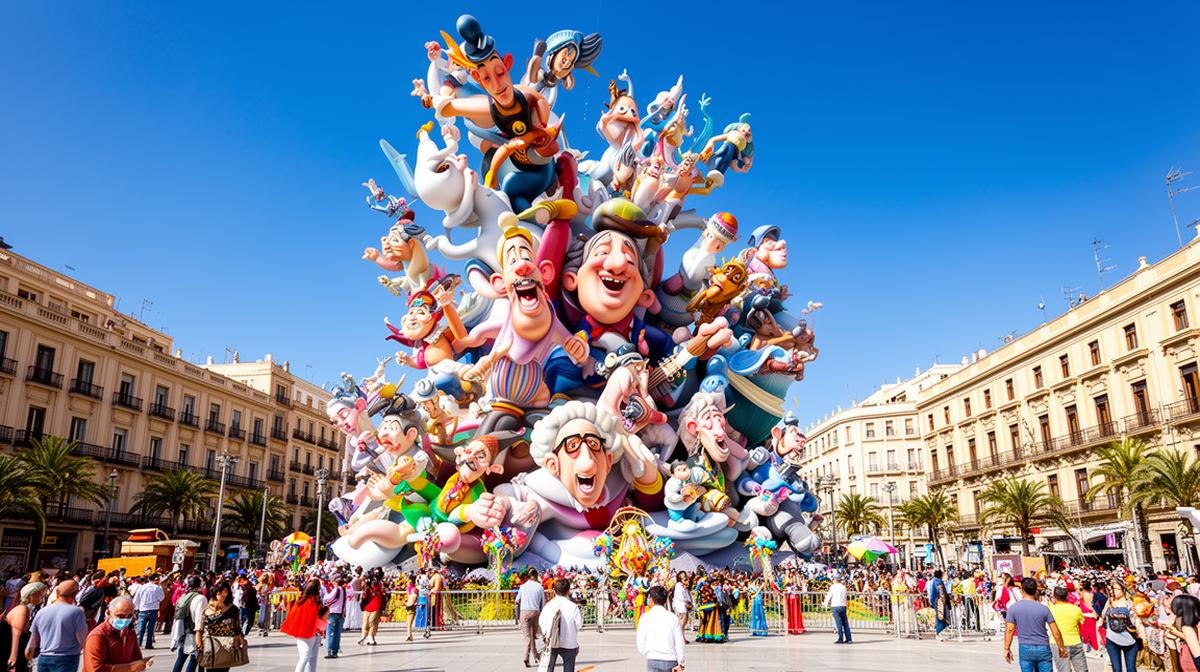
The basic concept is this: throughout the year, residents of each neighborhood organize into "fallas committees" and work to create giant cardboard, wood, and polystyrene monuments called "fallas" – artistic structures that can measure up to 30 meters high and represent political, social, or cultural satires with a lot of humor. Think of them as monumental sculptures that combine art, social critique, and a good dose of Valencian sarcasm.
But here's the surprising part: after being displayed for only 5 days (from March 15th to 19th), they burn them all! Yes, you read that right. Works of art that cost thousands of euros and months of work turn to ashes in one night. It's cathartic, it's impressive, and it's Valencia at its finest.
A little bit of history (I promise to be brief)
The tradition comes from 18th-century Valencian carpenters, who on St. Joseph's Day (March 19th, patron saint of carpenters) burned the "parots" – wooden structures they used to hold candles during winter. Over time, they began to decorate these structures with old clothes and create satirical figures. This is how this centuries-old tradition was born.
Today, Valencia "plants" over 700 fallas throughout the city during those days. There are huge fallas in the main areas that cost hundreds of thousands of euros, and smaller, more family-oriented fallas in residential neighborhoods. All are part of the same tradition, all have their charm, and all (except one) end in flames.
Main events you can't miss
La mascletà (daily at 2:00 PM)
Imagine this: you're in the heart of the city, in the Plaza del Ayuntamiento (Town Hall Square), it's 2 PM and suddenly... BOOM! For 6-7 minutes, thousands of firecrackers explode following a coordinated rhythm that makes your chest vibrate. It's not just noise; it's rhythm, it's pyrotechnic music. At first, it can be surprising, but then it becomes addictive. Valencians measure the success of Fallas by how good each mascletà was.
La plantà (March 14-15)
This is when all the fallas are officially installed in their places. The city wakes up transformed. Suddenly, there are giant monuments on every corner. It's the perfect time to explore Valencia and discover the fallas before the crowds overwhelm everything.
La ofrenda de flores (March 17-18)
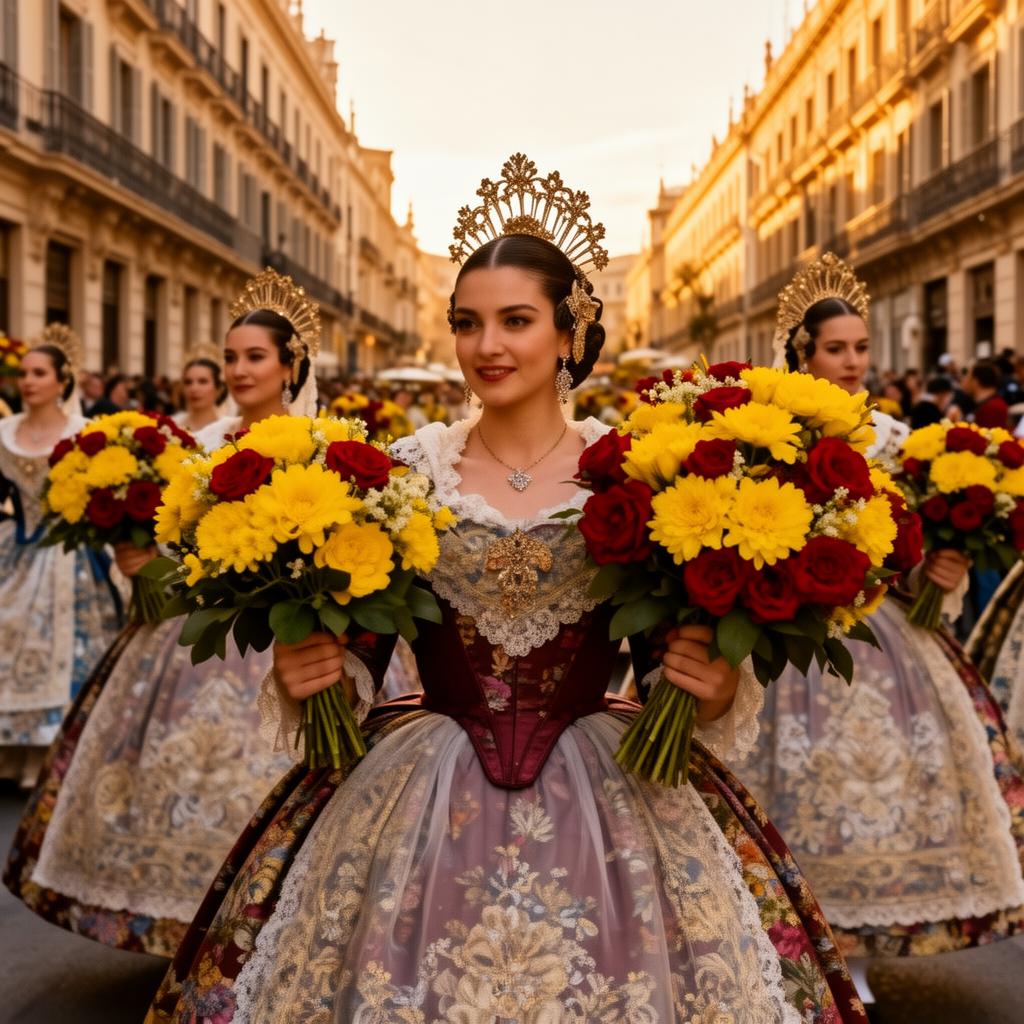
One of the most emotional and beautiful events. Thousands of Valencians dressed in traditional costumes (fallera and fallero attire) walk in procession to the Plaza de la Virgen (Virgin's Square) carrying bouquets of flowers. With these flowers, they construct a giant 14-meter mantle that covers a figure of the Virgen de los Desamparados (Our Lady of the Forsaken). It's colorful, moving, and conveys an impressive sense of belonging and cultural pride.
La cremà (night of March 19)
The grand finale. From 10:00 PM, the children's fallas begin to burn, and at 1:00 AM, the large ones are set alight. People gather around "their" neighborhood falla, firefighters prepare their hoses, and when the fire starts... it's an incredible spectacle. The heat can be felt meters away, the flames illuminate the night, and all the year's work turns to ashes in a matter of minutes. Only the winning falla of the first prize is saved and preserved in the Fallas Museum.
Practical tips for your first Fallas
Be prepared for the noise
From March 1st, every day at 8:00 AM, there's a "despertà" – falleros parade through the streets setting off firecrackers to wake up the neighborhood. If you live in the center or near a major falla, morning rest will be limited. There are also firecrackers throughout the day. If you are sensitive to noise or have pets, consider using earplugs and preparing your animals in advance.
The city gets crowded
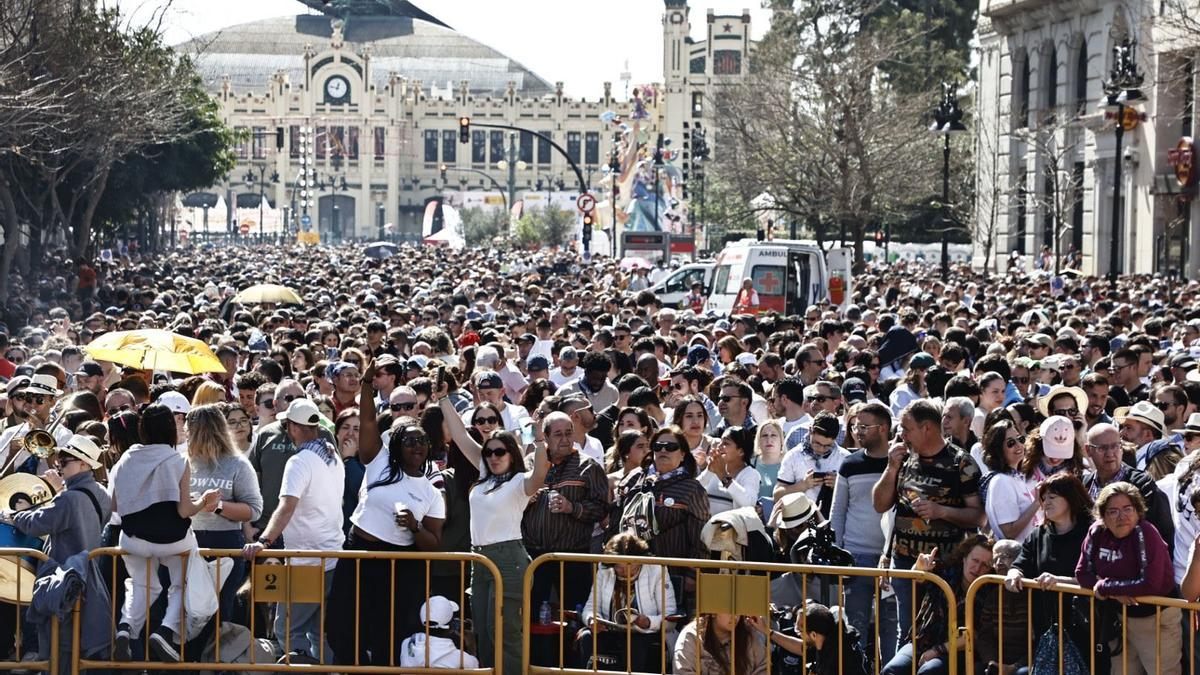
During Las Fallas, Valencia receives over 3 million visitors. Public transport gets saturated, city center streets are closed, and restaurants have 2-hour queues. The best thing is to accept that everything will take twice as long, leave with plenty of time, and adapt to the pace of the festival.
Where to be and when
- For the mascletà: Arrive at the Plaza del Ayuntamiento at least 45 minutes early if you want a good spot (or watch it from a balcony if you know someone).
- For the ofrenda: The best view is in the Plaza de la Virgen, but it's also beautiful to watch the processions pass through any street in the center.
- For the cremà: Choose a neighborhood falla if it's your first time. The ones in the city center are impossible to see due to the crowds.
Try the typical food
Las Fallas has its special dishes:
| Dish | Description | Approx. Price |
|---|---|---|
| Buñuelos | Fried pastries filled with cream or chocolate | 3-5€ per dozen |
| Agua de Valencia | Cocktail of orange, cava, vodka, and gin | 5-8€ per glass |
| Churros con chocolate | Classic of the Fallas stalls | 3-4€ |
| Bocadillos de caseta | Variety of sandwiches and tapas | 3-6€ |
How to experience Las Fallas like a local
If you truly want to immerse yourself in the experience, approach your neighborhood's falla committee. Many organize public events throughout the year, and during Fallas, their "casetas" (tents) are open with music, drinks, and atmosphere. Valencians are welcoming during these dates, and it's not uncommon to see newcomers integrating into the celebrations.
Another option is to rent or buy a second-hand fallera/fallero costume and participate in one of the processions or events. There are many specialized shops and groups that organize "ofrendas for international residents" where you can participate even if you are not part of a committee.
And most importantly: let yourself go. Las Fallas is not understood with the head; it's felt with the heart. It's chaotic, it's noisy, it's excessive – but it's authentically Valencian.
My final advice
Your first Fallas will be a culture shock, in the best possible way. It will be exhausting, you'll end up with ringing ears, and you'll go home smelling of gunpowder. But you'll also experience something that doesn't exist anywhere else in the world.
It's that kind of experience that makes you understand why people love this city so much. Because Valencia doesn't just celebrate its festival – it lives it with every fiber of its being. And when you see that first giant falla burn in flames while thousands of people shout and applaud, you'll understand that you are in a special place.
---
Need help finding accommodation in an area that allows you to enjoy Fallas without complications? Or do you want to arrive just after March when the city returns to calm? At Raíces Valencia, we help you plan your arrival, considering all these cultural details that make the difference between being a tourist and becoming a local.
Las Fallas awaits you. Valencia awaits you. And we are here to make your arrival as special as you deserve.
Are you moving to Valencia and want to experience your first Fallas like a local? Contact us and we'll help you find the perfect neighborhood, process your paperwork on time, and arrive prepared to immerse yourself in the best festival in the Mediterranean. Because relocating isn't just changing countries – it's embracing a new culture. And what better way to start than with fire. 🔥