US documents for Spanish residency: how to get them, apostille them and translate them
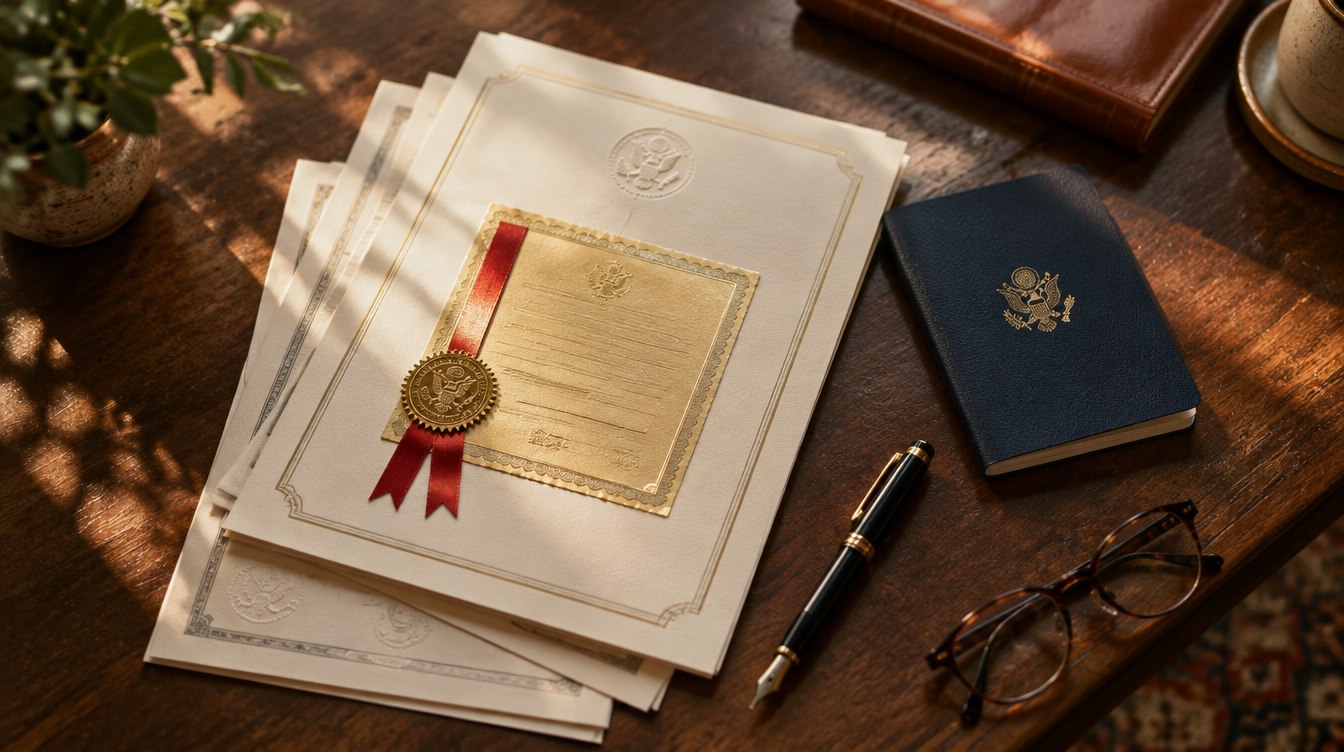
Moving to Spain from the United States means presenting American documents that the Spanish administration will accept. And "accept" means three different things that get confused all the time: obtaining the document, apostilling it and translating it.
Reversing or skipping one of those steps is the most common reason files get sent back. This guide explains them in order.
Which documents are required
It depends on the visa, but these almost always appear:
- FBI criminal background check, officially the Identity History Summary. The state police or county version does not work: for immigration, Spain requires the federal one.
- Birth certificate, for family reunification or when minors are involved.
- Marriage certificate, where applicable.
- Academic degrees, if they are going to be recognised or you practise a regulated profession.
An expert warning: these certificates have a limited validity in immigration files, and the deadline is set by the relevant consulate. Requesting them too early is as much of a problem as requesting them late. Confirm the exact window before starting, because it drives the whole calendar. And if it was not planned, there are still ways to get them in time.
Step 1: the FBI certificate
There are two routes.
- Directly with the FBI. You send the application with your fingerprints and wait. It is the cheapest option: the fee is around 18 dollars. There is no express processing for extra money.
- Through an FBI-approved Channeler. These are companies authorised to submit fingerprints electronically, which cuts the wait from weeks to days. They charge their own service fee on top of the federal one.
Both routes need the same thing: fingerprints.
The real problem: getting fingerprinted when you are already in Spain
This is where almost everyone gets stuck, and where generic guides fall short. Where and how do you do it? Is it safe and reliable?
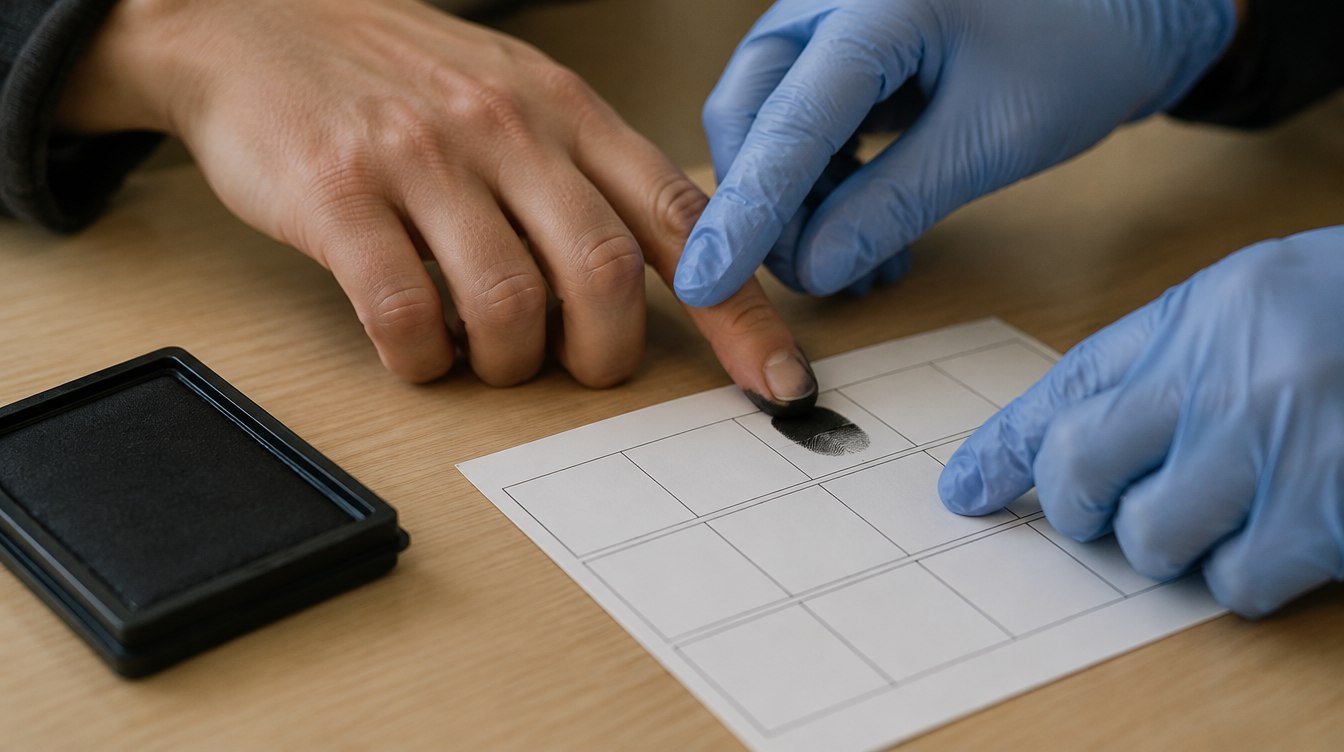
The FBI needs the prints in a specific format, taken so that it can process them. Anyone in the United States solves it at a police station or an authorised centre. Anyone already in Spain has to find someone who can take prints that are valid for the FBI and submit them correctly.
It is not impossible, but it is the part that causes the most delays and the most repeats: badly taken prints are rejected and you start again, with the clock already running.
That is why it matters to use a service set up for exactly this.
Step 2: the apostille
Spain is a party to the Hague Convention, so no consular legalisation is needed: an apostille is enough.
The problem is that in the United States there is no single apostille office. It depends on who issued the document:
| Document | Who apostilles it |
|---|---|
| FBI certificate (federal) | US Department of State, Office of Authentications |
| Birth, marriage, death certificate (state) | Secretary of State of the issuing state |
| University degree | It depends: usually needs prior notarisation and goes through the state route |
Sending a Florida birth certificate to Washington is wasted time: they send it back. The reverse is just as true.
Three rules that avoid a second mailing:
- The apostille goes on the original or a certified copy. Not on a photocopy, not on a scan printed at home.
- The issuing state apostilles the document, not the state where you live now. Born in Ohio, living in Texas: it goes to Ohio.
- For the federal route there is a form, the DS-4194, which accompanies the document together with the fee, around 20 dollars per document, and a prepaid return envelope.
Step 3: the sworn translation
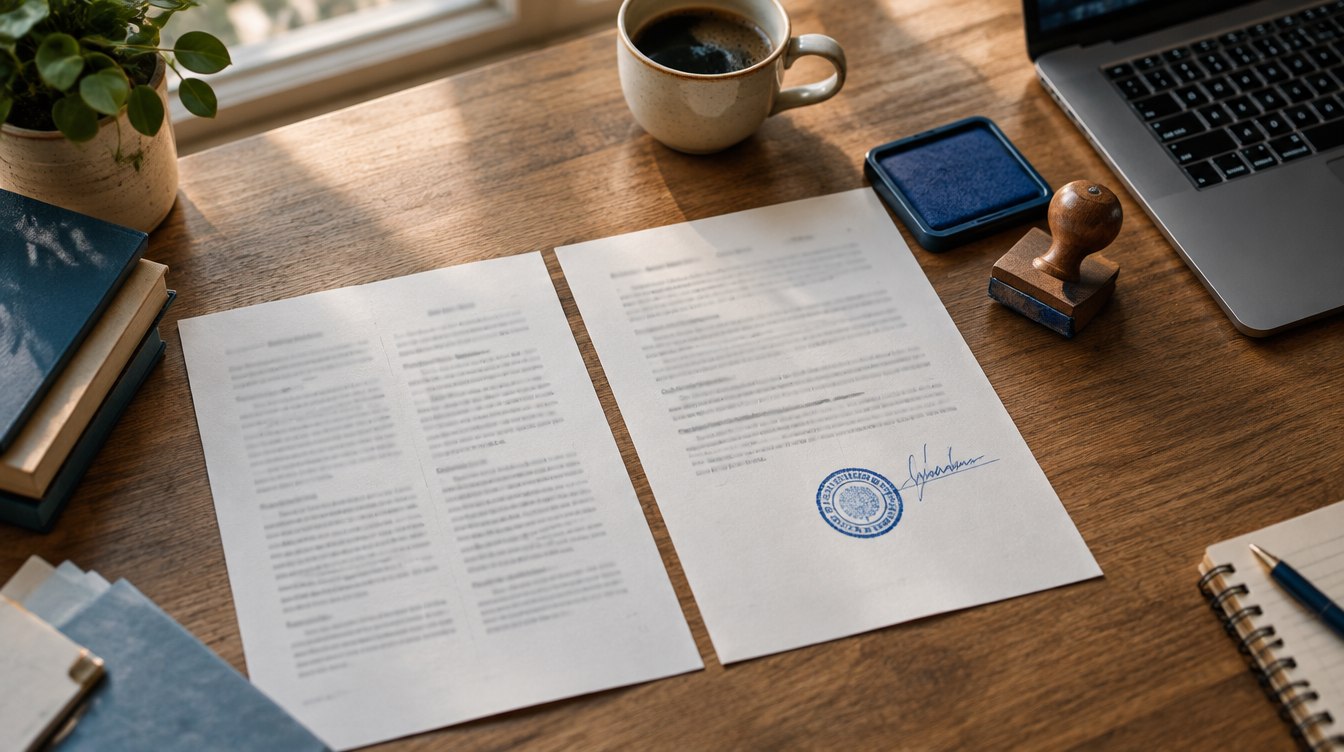
The apostille is not the end. Spain requires the document in Spanish, and not just any translation will do.
It must be done by a sworn translator-interpreter appointed by the Spanish Ministry of Foreign Affairs. These are individuals with an appointment number who sign and stamp. The Ministry publishes the official list, where you can check whether the person translating is actually appointed.
Two details that save paying twice:
- Translate after apostilling, never before. The apostille is part of the document and must be translated too. Translating first means doing it again.
- A company cannot be "certified by the Ministry". The Ministry appoints individual translators. An agency can work with sworn translators, which is perfectly legitimate, but the accreditation always belongs to the translator. Faced with any sworn translation offer, the right move is to ask for the translator's name and appointment number and check it against the list.
The realistic timeline
Adding up the three steps, with the fingerprints sorted:
| Step | Indicative time |
|---|---|
| Fingerprints + FBI certificate | Days (via Channeler) to several weeks (direct route) |
| Apostille | Weeks, depending on the office and whether it goes by mail |
| Sworn translation | Days |
A reasonable total is six to ten weeks, and it can balloon if anything is rejected. That is why this paperwork should start before the housing search, not after it.
The five mistakes that get the most files sent back
- Submitting the state certificate instead of the federal FBI one.
- Apostilling at the wrong office, federal instead of state or the other way round.
- Translating before apostilling.
- Apostilling a photocopy instead of the original or a certified copy.
- Starting late, or so early that the certificate expires before it is submitted.
If you would rather not handle it yourself
It can be done on your own, and anyone still in the United States with time ahead of them probably should: the official fees are low.
The equation changes once you are already in Spain. Coordinating FBI-valid fingerprints, two different apostille offices and a sworn translator, across a six to nine hour time difference and without being able to walk up to any counter, is where doing it yourself stops paying off.
For that case there is a specialised service, Tu Apostilla, which handles fingerprints, the FBI certificate, apostilles and sworn translation of US documents bound for Spain.
Affiliate link: if you order through it, Raíces Valencia receives a commission. It costs you nothing extra.
As with any agency, ask for the timeline and price in writing before hiring, and confirm the name of the sworn translator who will sign the translation.
And once the paperwork is sorted, the other problem remains: the home. That part is on us.
Frequently asked questions
Does my state or county background check work?
No. For immigration, Spain asks for the federal FBI one, the Identity History Summary. A state certificate gets sent back even if it is apostilled and translated.
How long is the FBI certificate valid for the visa?
Each consulate sets its own window and they are not all the same. Confirm it before requesting the certificate, because requesting it too early means doing it again.
Can a US document be apostilled while already in Spain?
Yes, by mail or through an intermediary, but each office has its own timelines and you lose the option of showing up at a counter. It is the part most worth delegating once you are no longer in the country.
Can any translator do the sworn translation?
No. Only a sworn translator-interpreter appointed by the Spanish Ministry of Foreign Affairs, with an appointment number and their own signature and stamp. Their name must appear on the Ministry's official list.
What else should I keep in mind when moving from the US?
The tax side, which almost nobody explains: the 183-day rule and what the IRS still requires from Spain. It is in Moving to Spain from the US: the tax side. And the mistakes that repeat on arrival, in mistakes when moving to Spain.