Is Valencia safe? What the data says, and the areas we avoid when flat hunting
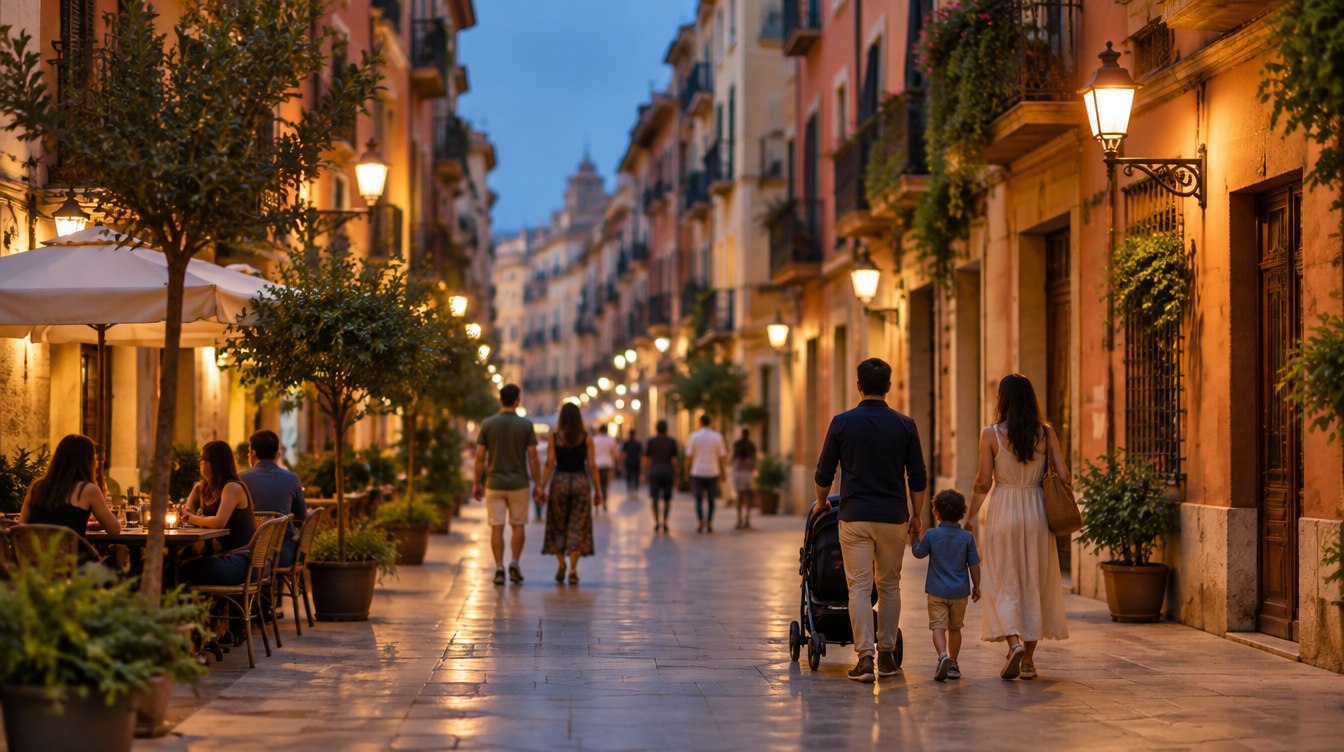
Yes, Valencia is a safe city to live in. It is the question we hear most before a move, and the short answer does not change: you can walk around most neighbourhoods at night, take the metro at any hour and let your kids play in the square without living on edge.
The long answer has nuances, and we give them to you with official data. We also show you, on our own map, the few areas we avoid when we look for a flat for a client. Not because something will happen to you, but because when you are new you have no context, and there is no point starting out with hassle.
What the official data says
Spain's Ministry of the Interior publishes its crime report by municipality every quarter. In 2025 Valencia recorded 62,484 criminal offences, 0.3% fewer than the year before. With 840,792 residents according to the official census, that is about 74 per 1,000 people.
What matters is what sits inside that number:
- Most of it is petty theft: 23,635 cases, 37.8% of the total. Think a phone lifted off a café table or a wallet in a crowd.
- Violent robbery fell 5.5%, from 2,209 to 2,088.
- There were 6 homicides in the whole year, in a city of more than 840,000 people.
Compared with Spain's other big cities, Valencia sits in the middle:
| City | Offences 2025 | Per 1,000 residents | Change vs 2024 |
|---|---|---|---|
| Barcelona | 169,678 | 98 | −3.6% |
| Valencia | 62,484 | 74 | −0.3% |
| Seville | 50,253 | 73 | −1.6% |
| Madrid | 229,662 | 65 | −3.1% |
| Málaga | 38,225 | 64 | +2.3% |
| Spain average | 2,474,156 | 50 | +0.8% |
Per 1,000 residents: our calculation using the 2025 census. 2025 figures are provisional.
Big cities always sit above the national average, because they concentrate tourism, nightlife and transport. And in the interest of honesty: the first quarter of 2026 was up 3.0% on the same period of 2025. That is normal fluctuation rather than a new trend, but we would rather you heard it from us.
As safe as which city?
To compare across countries, the most quoted reference is Numbeo, a survey of residents on how safe they feel. It is not police data, but it puts things in context. The higher the index, the safer the city feels:
| City | Safety index (mid-2026) |
|---|---|
| Amsterdam | 70.0 |
| Lisbon | 67.1 |
| Valencia | 62.5 |
| Toronto | 56.3 |
| Berlin | 55.4 |
| New York | 49.2 |
| Miami | 46.7 |
| Los Angeles | 46.2 |
| London | 44.7 |
| Paris | 42.1 |
On that index, Valencia is about as safe as Calgary, Brisbane or Riga, and it feels clearly safer than London, Paris or any large US city. Residents who answer the Numbeo survey score walking alone in daylight at 83 out of 100, and at night at 59.
The gap is even clearer at country level. According to the UN figures published by the World Bank, Spain had 0.69 homicides per 100,000 people in 2023. The United States had 5.76, Canada 1.98 and France 1.34; the UK's latest figure is 1.12 (2021). In the Global Peace Index 2026, Spain ranks 27th out of 163 countries. The UK is 39th and the US 134th.
What does happen: pickpockets
The real risk for people living in Valencia is petty theft. It clusters where there are crowds and tourists: the area around the Central Market and the Silk Exchange, the City of Arts and Sciences, packed terraces during Fallas and weekend nights out.
Three habits solve almost all of it:
- Never leave your phone on a café table. It is the most common theft by far.
- Wear your backpack on your front on a crowded metro and at the mascletàs.
- At the beach, leave nothing valuable on the towel if you all go swimming at once.
The areas we avoid when flat hunting
There is no part of Valencia you cannot go to. What there is, is a handful of areas where we would not look for a flat for a newly arrived client: more neighbour disputes, illegal squatting or frequent police activity, which turns into everyday hassle that a lower rent does not make up for.
The Ministry does not publish crime data by neighbourhood, so we rely on what the City Council, the local police and the Valencian press report, and on what we see on viewings. These are the three we get asked about most, marked on the map we use with our clients:
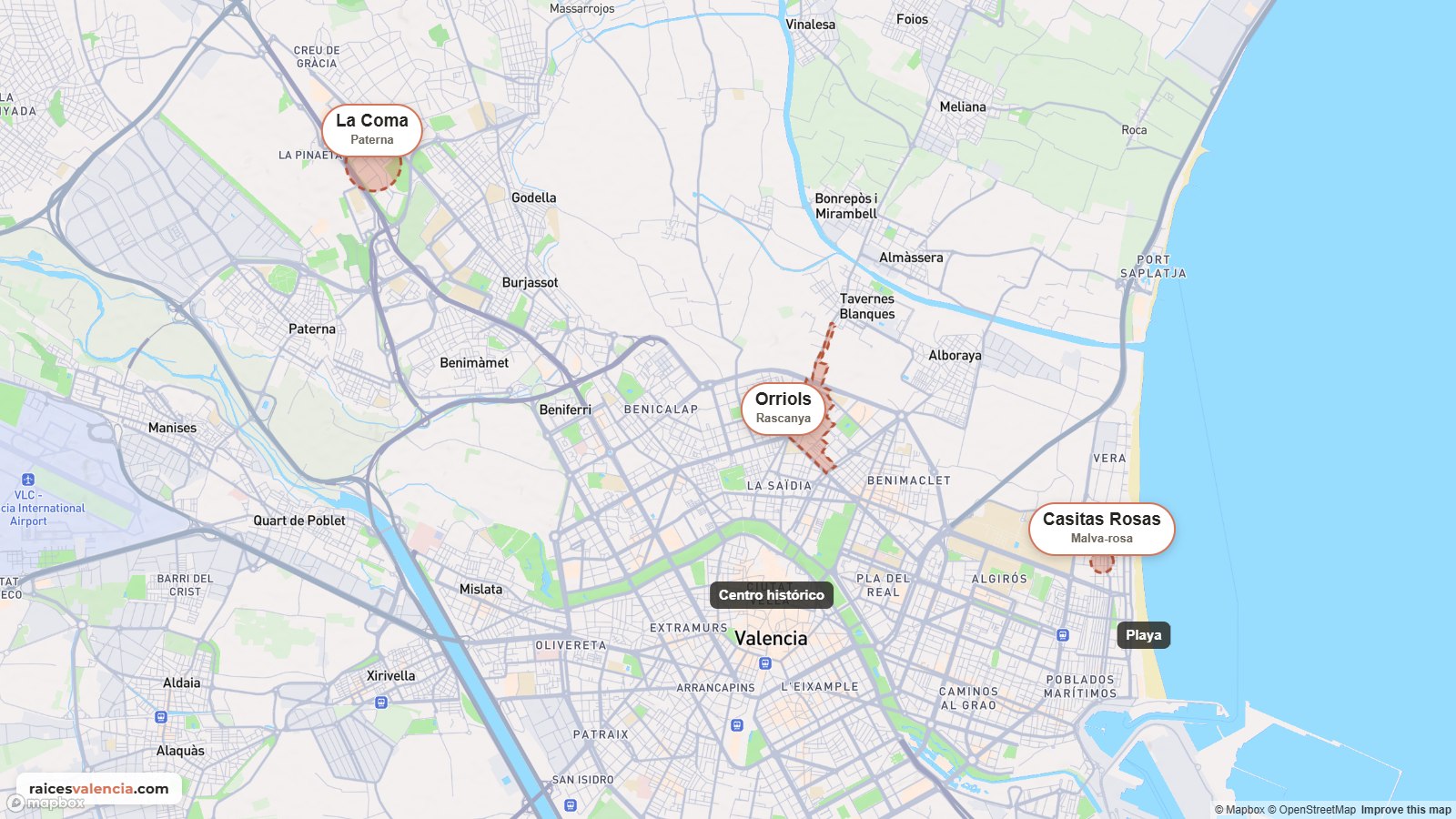
Orriols (Rascanya)
Orriols is a working-class neighbourhood in the north of the city, with quiet streets and long-standing families. The problem is concentrated in a few blocks: at the end of 2023 the local police counted around 60 squatted flats, all illegally hooked up to the electricity grid, on streets such as San Juan de la Peña, Padre Viñas and Duque de Mandas. More than half were cleared in 2024, according to Valencia Plaza, and in 2025 the national government reinforced police patrols.
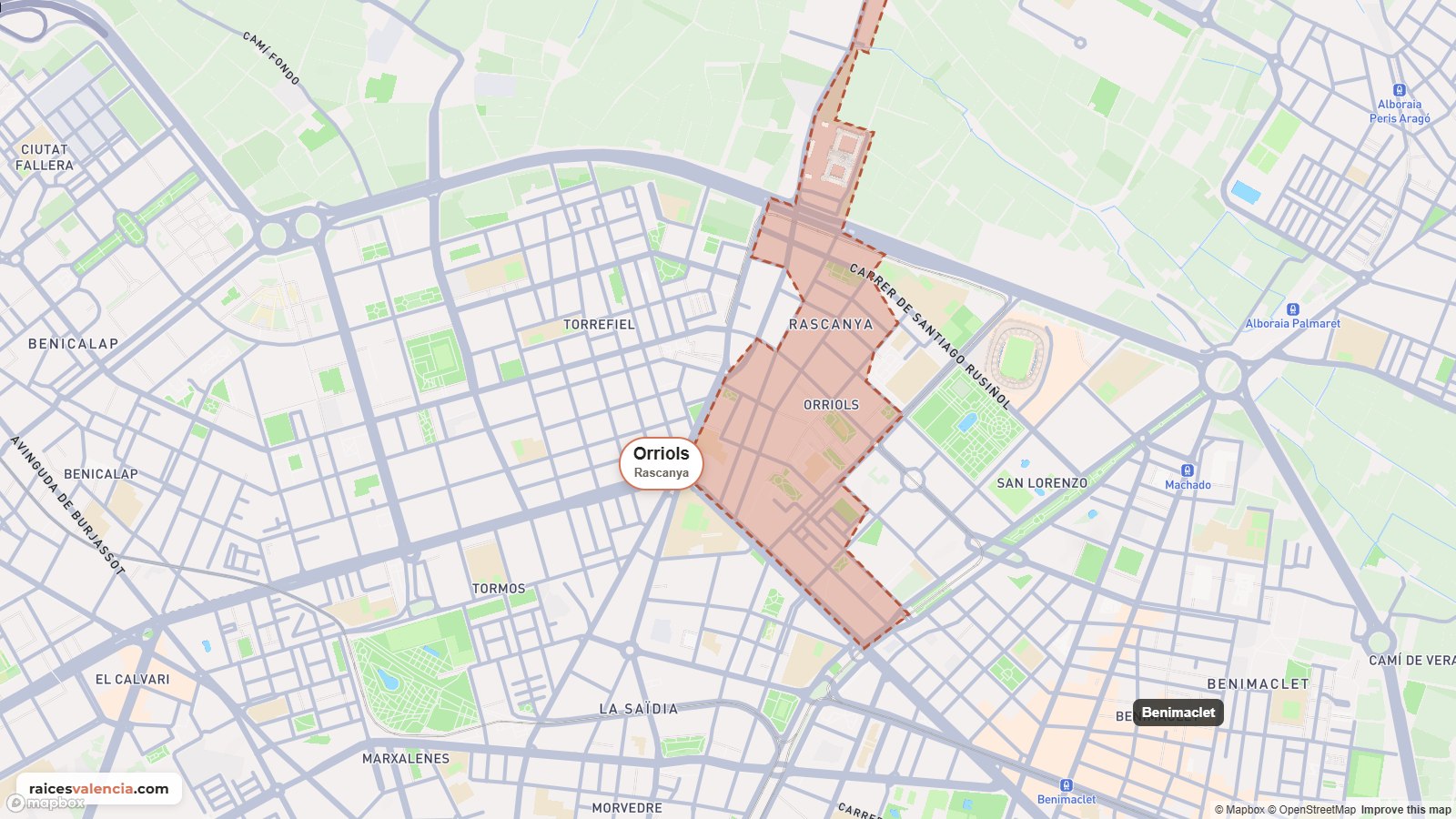
Low prices are tempting, but as a newcomer you cannot tell one street from the next. If you like the north of the city, Benimaclet is right next door and a very different story.
La Coma (Paterna)
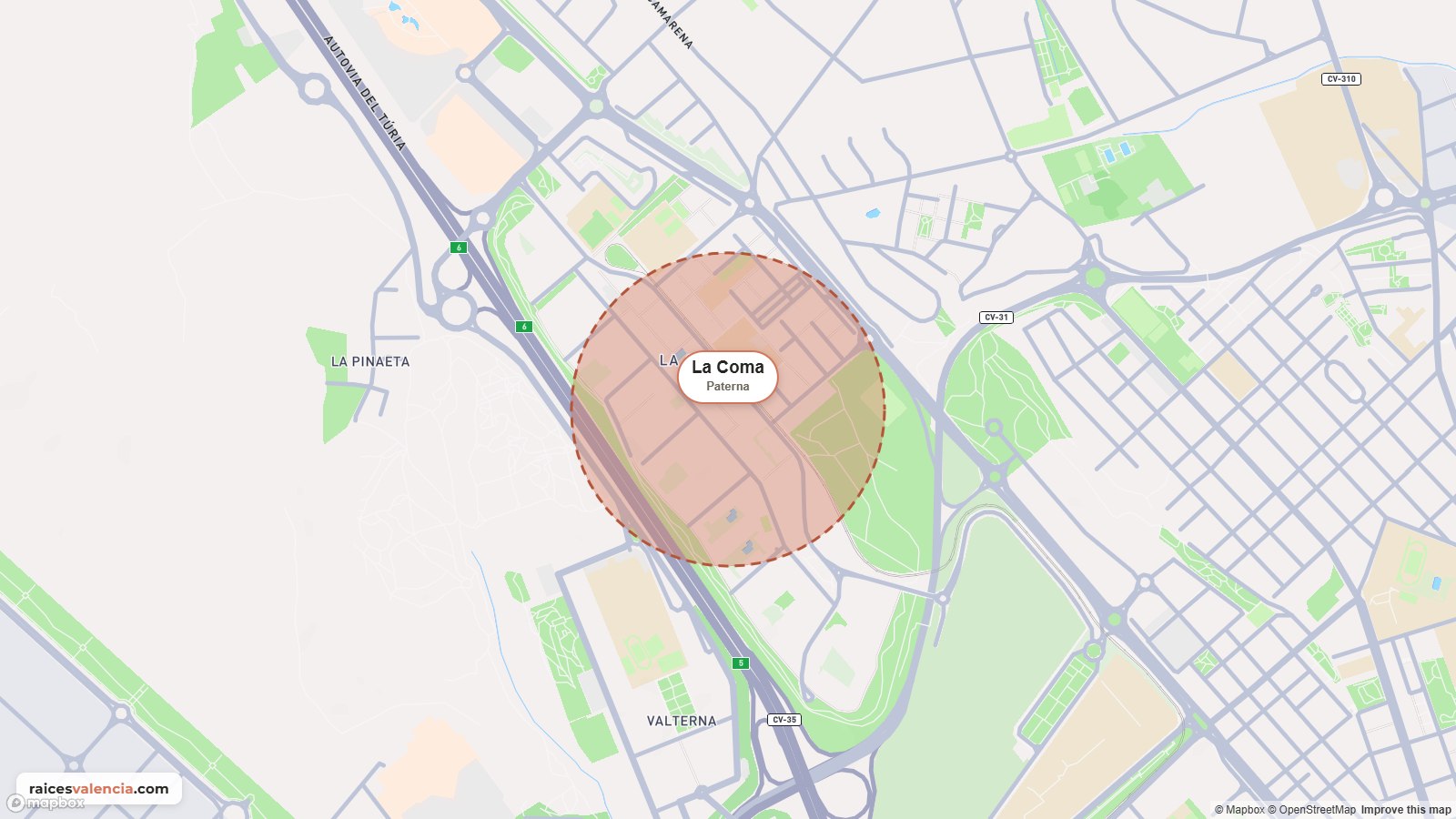
La Coma is not in Valencia city but in Paterna, next to the tram stop of the same name. We include it because it shows up in searches for cheap flats in the metro area. It has struggled with social exclusion for years: in November 2025 the regional health department closed its health centre for security reasons after staff were assaulted, and reopened it in April 2026 with security guards and metal detectors.
The Casitas Rosas (Malva-rosa)
These are three salmon-pink housing blocks built after the 1957 flood in Malva-rosa, a few minutes from the beach. The City Council itself described them in 2024 as one of the points with the most social conflict in the city, and in September 2026 it approved a plan to demolish the two most run-down blocks and build 545 new homes.
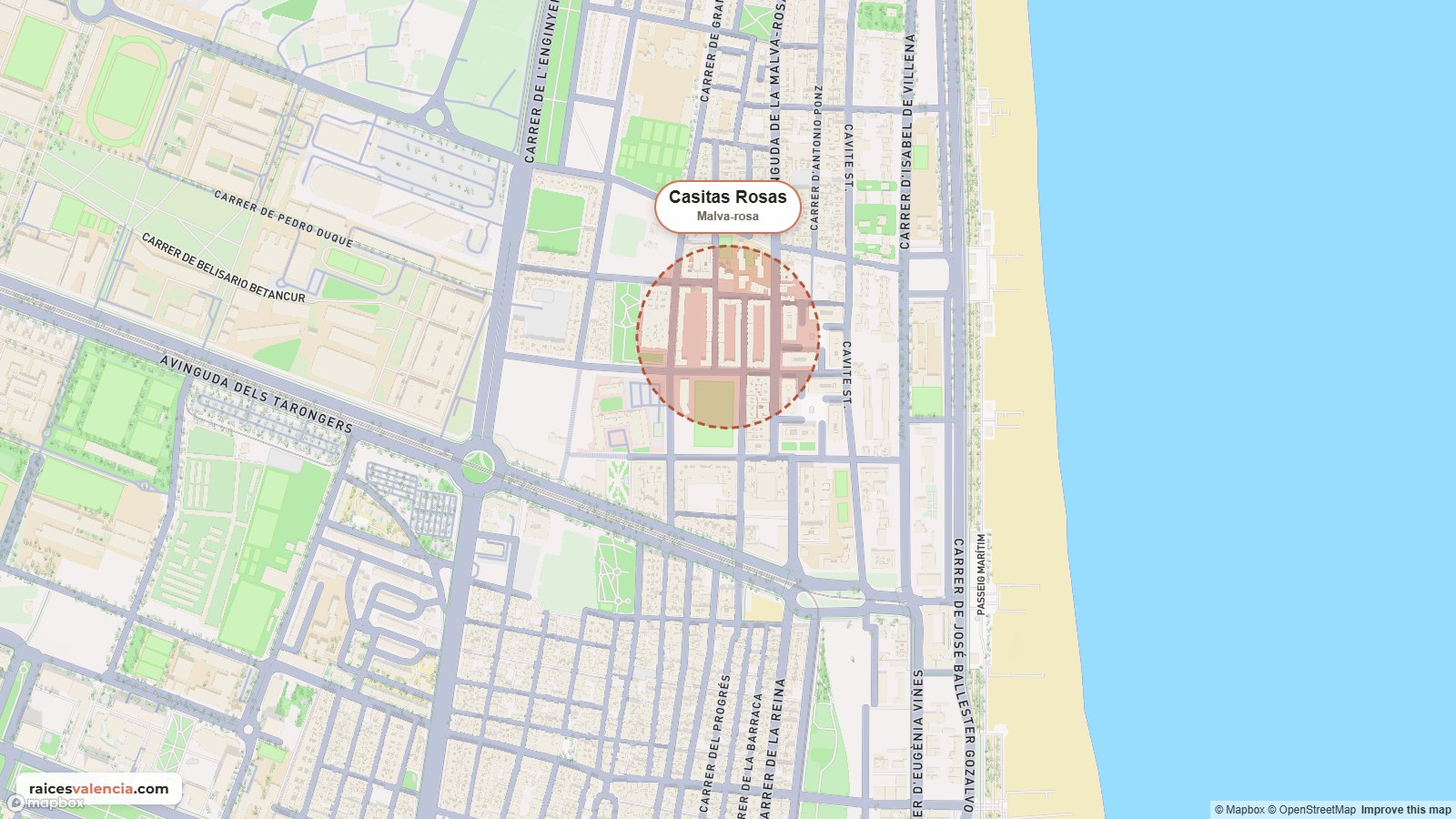
This is the classic trap: very cheap listings "five minutes from the beach". The rest of Malva-rosa is a pleasant beach neighbourhood; these three blocks, for now, are not.
A note on the old town
In Ciutat Vella, a few streets in Velluters, around Viana, Torno del Hospital and Balmes, have seen residents complain for some time about drug use and street prostitution. In July 2026 a police operation led to nine arrests. Velluters as a whole is a lively neighbourhood; we only look closely at those specific streets.
How we handle it
In every case, the problems are concentrated in a few blocks of a city with almost 90 neighbourhoods. The problem is that you cannot see it from abroad: a listing with good photos and a good price does not tell you what is in the building next door.
That is why we view flats in person, at different times of day, and check the street, not just the neighbourhood, before we show you an option. We mark it all on a private map for each client, the same one you see in this article. If you would like us to search with you, tell us what you need. And if you are still choosing an area, start with our guide to the best neighbourhoods to live in Valencia.
Frequently asked questions
Is Valencia safe at night?
Yes, in the vast majority of neighbourhoods. In the Numbeo survey, residents score walking alone at night at 59 out of 100, against 83 in daylight. The precautions are those of any European city: stick to busy streets and watch your phone in nightlife areas.
Is Valencia safer than Madrid or Barcelona?
Safer than Barcelona and slightly less safe than Madrid. In 2025 Valencia recorded about 74 criminal offences per 1,000 residents, against about 98 in Barcelona and about 65 in Madrid, according to Spain's Ministry of the Interior.
What is the most common crime in Valencia?
Petty theft: almost four in ten criminal offences. It clusters in tourist areas such as the Central Market and the Silk Exchange, and in crowds.
How safe do locals feel?
In the City Council's survey on safety, residents scored the city's safety at 7.1 out of 10 and their own neighbourhood at 6.8.
Which are the safest neighbourhoods in Valencia?
The Ministry does not publish crime data by neighbourhood, so nobody can give an official ranking. What we can tell you is where we most often find flats for families and professionals: it is all in our guide to the best neighbourhoods to live in Valencia. And if you are searching from abroad, read how to spot rental scams too.